
Advanced Brain Aneurysm Treatment
Through Minimally Invasive Neurointervention
Modern catheter-based techniques allow brain aneurysms to be treated safely without open brain surgery, using advanced imaging and precision neurovascular intervention.
- Minimally Invasive Procedure
- Advanced Neurovascular Imaging
- Evidence-Based Treatment
Understanding the Condition
What Is It?
A brain aneurysm is a bulge or ballooning in a weakened blood vessel in the brain that may rupture and cause serious bleeding.
Who Is At Risk?
People with high blood pressure, smoking habits, family history of aneurysm, or vascular disorders.
Why Early Detection Matters
Timely diagnosis can prevent rupture and significantly improve treatment outcomes.
Treatment Approach
Most aneurysms today can be treated using minimally invasive endovascular techniques.
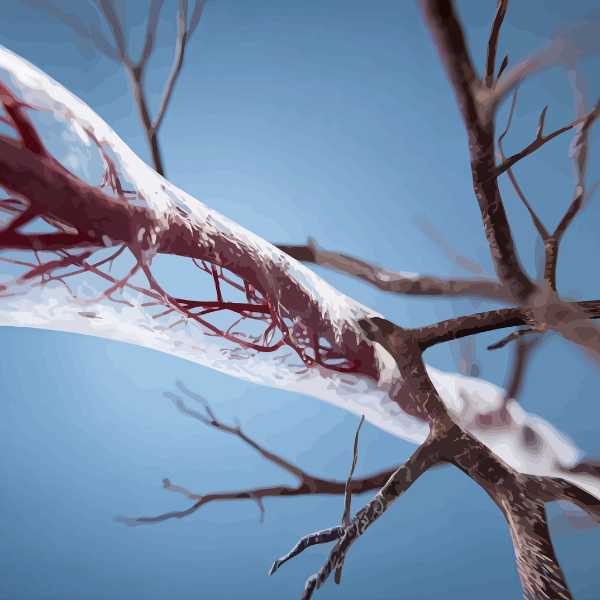
What Is a Brain Aneurysm?
A brain aneurysm occurs when a weak area in the wall of a blood vessel in the brain begins to bulge or balloon outward. If this bulge ruptures, it can lead to bleeding in the brain, known as a subarachnoid hemorrhage, which requires immediate medical care.
Advancements in neurointervention procedures now allow many aneurysms to be treated using minimally invasive catheter-based techniques performed through blood vessels rather than open brain surgery.
Possible Symptoms
- Sudden severe headache
- Blurred or double vision
- Neck stiffness
- Sensitivity to light
- Nausea or vomiting
- Weakness or numbness in face or limbs
- Difficulty speaking
- Symptoms vary depending on aneurysm size, location, and whether rupture has occurred.
Seek Immediate Medical Attention If You Experience
Sudden severe headache (worst headache of life), Loss of consciousness, Sudden vision disturbance, Weakness on one side of the body, Difficulty speaking or understanding speech
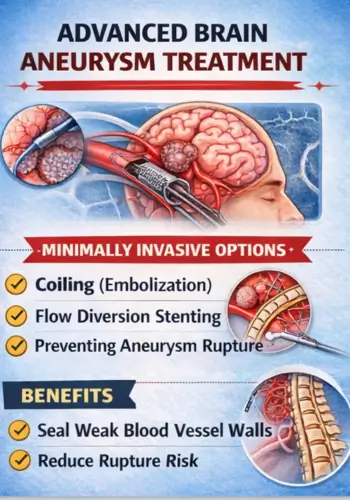
Advanced Brain Imaging for Accurate Diagnosis
- CT Scan
- MRI Brain
- CT Angiography
- Digital Subtraction Angiography (DSA)
Treatment Options
Modern Brain Aneurysm Treatment Options
Today, most aneurysms can be treated using endovascular neurointervention procedures, where specialized micro-catheters are guided through blood vessels to reach the aneurysm inside the brain.
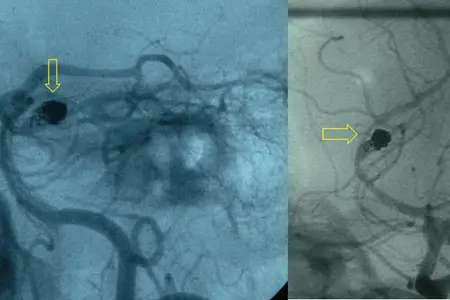
Endovascular Coiling
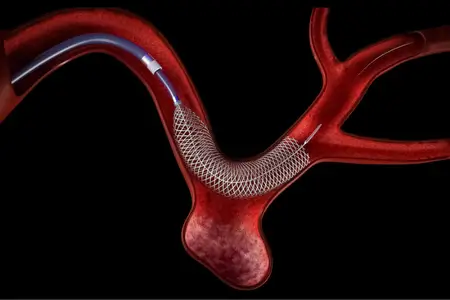
Flow Diverter Placement
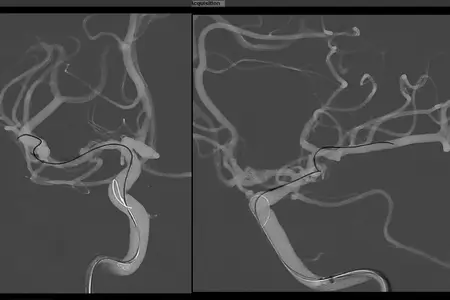
Stent-Assisted Coiling
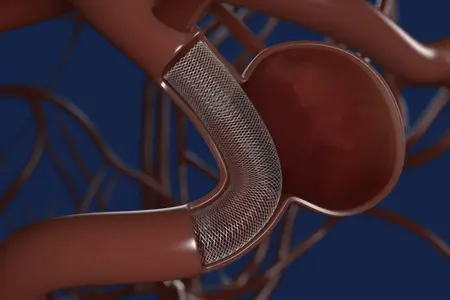
Balloon-Assisted Coiling
These procedures help block blood flow into the aneurysm and prevent rupture.